A meditation on death (from April 2020)

In the time of Covid-19 and the eruption of the festering wound of racism in this country, I find myself pondering mortality and the importance of acting in values-congruent ways more than usual.

The deaths of Ruth Bader Ginsberg (1933-2020) and Breonna Taylor (1993-2020) have both dramatically changed the landscape in which we live. An 87-year old, white, Jewish, legal scholar, and U.S. Supreme Court Justice, Ginsberg fought for women’s rights and the rights of those on the margins for decades. Her legacy can be seen across law books, films, and in the structural DNA of policy in the United States. Taylor, a 26-year old Black woman studying to be a nurse, was gunned down in her own home in March just a few days before the nation locked down in a pandemic. Their lives and deaths could hardly have been more different, and their narratives have further mobilized thousands. Certainly, RBG’s passing is a singular event which has thrown our political system from a free fall into a tailspin while Taylor’s death represents yet another death of an unarmed Black person at the hands of the police.

It’s important to emphasize that Breonna and Ruth were real people with real lives and many people for whom their deaths leave deep, personal grief. What I am writing about here is more abstract. The deaths of Taylor and Ginsberg intersect in 2020 as events which demand action and signify a wounded world. Ginsberg who passed comfortably, surrounded by family, is remembered as a ‘tzadik,’ a true righteous person in the Jewish tradition, was the first woman and the first Jewish person to lie in State at the United States capitol. Breonna Taylor was not a household name until March, 2020, and it was only in death that she became “newsworthy.” The nature of Breonna Taylor’s last minutes has fueled my nightmares and actions for months. Ginsberg’s death represents an extant threat to myriad freedoms, primarily to women and those of us on the edges.

For too long, psychologists and allied mental health professionals have been encouraged to remain neutral in our public-facing lives lest we create some kind of rift in our relationships to clients. In this neutral stance, we have created and maintained chasms between access to mental health care and the people who need it most. White, cisgender, heteronorming, Judeo-Christian men have dominated the narrative of psychology while shunting off Black and Brown women and queer folks to the so-called “lesser” fields of social work, nursing, and counseling. As any systems psychologist will tell you, a system, once established, will work to sustain itself and maintain homeostasis. In our system, neutrality works for those in power because it minimizes rage and invalidates social action. Old-school psychology would argue that if you struggle under systems of oppression, that isn’t something to bring into session. Sure, some argue, the environment you exist in may be rough, but that is not something to examine in therapy because it can’t be changed at an individual level. A psychologist’s job is not to shift anything beyond an individual’s thoughts, feelings, or actions; thus, a psychologist must not be seen to have any stake in the world writ large. This works for those who benefit from social inequity, for Freud’s “worried well,” and for mental health practitioners who believe our work begins and ends at the office door.  However, it has deprived communities and policy makers our perspective, placed unnecessary burdens on those very professionals shunted off, created distressing personal-professional divides, and most importantly, left so many people on the edges feeling unseen and literally untreated.

Returning to Taylor and Ginsberg, what strikes me most about the passing of these two remarkable women is not their differences; rather, it is how the fragility of life stands as a call to action. We have been witness to a dramatic shift in the cultural narrative around human rights and social justice. Here in the United States, we find ourselves at a critical moment and many of us are feeling the galvanizing power of communities coming together to speak truth to power. I don’t pretend to think that everyone reading this will immediately go out and protest or engage in overt social justice action. What I do hope is that each of us will find a way to connect our personal values and professional lives in profound ways. By acknowledging inequity, engaging in learning, and acting with integrity, we can make profound change. We spend decades dedicated to understanding human behavior and bringing healing wherever we can, why not allow ourselves to use all this experience and knowledge to better ourselves, our clients, and our world?

Whit Ryan 2020

Thoughts on training

brainLast week several momentous things happened in my life. In no particular order, I accepted an offer of admission at the University of Denver’s Graduate School of Professional Psychology’s doctorate program, I started working with a new personal trainer, Courtney Shelby, and I was honored to receive an appointment to umpire at the IMHA Masters World Cup in Barcelona this summer (shameless plug for my fundraising campaign here).  I mention these together because they represent both training and goals in my life. Physically, academically, and emotionally, I have changed in ways I couldn’t have predicted. Many of these changes have stemmed from setting specific goals for myself and training to get there.
I was speaking with a mentor about how much has changed in my life in the past three years and the anticipated changes forthcoming. He asked about the World Cup and how much physical work goes into each game. On average, we put in about 5 km (3 miles give or take) per game. At the World Cup, I will be umpiring two games a day at most. Just like the players on field, I need to be physically and mentally fit enough that the work rate required is well below my capacity for work. Inevitably, umpires make hundreds of decisions in a match and face pressures from many directions. The last pressure I need to feel is my lungs burning or my knees aching. In the world of “controlling the controllables” I can control my preparation. I want to be able to do several 75m sprints in a row and not be winded and put in 20 km of interval training in a day without being tapped at the end of the day or exhausted the next. Hopefully I won’t ever have to do that much in a game or tournament day but if my physical preparation is there, I can go into the tournament confident that my fitness is where it needs to be.

Similar to umpiring a high-level match, working in a consulting or clinical setting requires peak preparation. While we’re not running dozens of kilometers (usually) or addressing amped up athletes with sticks (often), it is not unusual to feel “on the spot” as a consultant, counselor, or clinician. We interact with the most unpredictable of creatures, the human being in vulnerable emotional states. Just as it is impossible to predict how a player is going to act when a decision goes against them, we can not know how a client is going to act or react in every situation. We can use our training to anticipate and be prepared for the surprising.

By participating in rigorous training, we prepare ourselves for the unexpected. With years of study, exams, role play (“real play”), and countless hours of supervised work, we train our minds, emotions, and bodies to be where they need to be when they need to be there. While every situation is different, if I train to the point of competency, I can feel confident that I am capable of encountering the challenges clients bring me. Just like I know I have my fitness, my experience, a partner on the field, a technical table, the rules, and umpire managers to support me; I have my training, supervisors, peer consulting groups, and experience to lean into as a consultant and clinician-in-training.

It’s not just similar styles of training, there are techniques which I use before, during, and after matches and sessions with clients. Mindful meditation, tactical breathing, performance readiness plans, evaluations, stretching, journaling, and walking meditation are just a few things which apply across all of my work. I know that I am not alone in these crossover activities.

After all, everyone is a performer and everything we do is a performance in some capacity or another. By training mentally, physically, technically, and tactically to be where we need to be when we need to be there, we are priming ourselves to perform at our peak.

~WHR 2 April, 2018, Denver, CO

How Do We Measure Success?

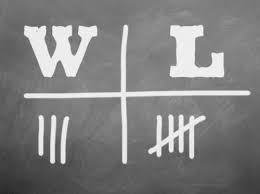
Here is an interesting thought experiment for you… imagine you are a competitive athlete at the height of your career, fighting for a spot on the team and trying to evaluate your work to get better. Now imagine that you have no win-loss, RBI, GAA, personal records, trophies or medals to show you how you are doing.

w-l

How do you know if you are doing well? How do you know what to work on and where your strengths lie? What about your competition?  Where you stand if you don’t know who is winning? What if you are just starting off in this new sport and don’t have anything to base your performance upon?

This is the life of the sports official.

Let that sink in for a bit.

tick tock

As an SPP practitioner, seeking the answers to these questions has helped me work with officials and with people in other performance domains (particularly those with wins and losses to look at).

Of course, referees have benchmarks and ways to look at their work but they never win or lose. Just like competitive athletes, they train, compete, evaluate, watch game film, and continuously strive to improve their game. Naturally, there are ratings, big games, important tournaments, and promotions which they can use to say they are doing well but those aren’t as clear as a stat sheet or record.

This leads to the concept of process goals. Things like “winning the Super Bowl” and “beating the national record” are usually outcome goals.

We don’t have control of outcome goals. Let’s take winning a club championship as an example. How many factors beyond an individual or team’s control go into winning that championship? There are opponents, weather, referees, injuries, illnesses, the bus might break down on the way to your playoff game… I could go on. So, you don’t win that championship. Does that make you a failure? Well, I suppose it depends on how you define success and failure. SPP practitioners caution against defining success and failure only in terms of wins and losses.

We do have control of process goals. When I work with an umpire, I like to break down the process into bite-sized pieces and create process goals from those bites. Everyone’s will be different but the key is knowing that (barring some totally unforeseeable circumstance) we control our process goals. For example, if someone wants to improve their rate of having their calls upheld on video review (outcome) we would break it down into the factors which go into making that good call for them. Perhaps they have been given the feedback that they are missing a step at midfield which puts them in a spot where it’s hard to make the correct call. We would break it down even farther to see what is happening in their mind to make them miss that step. Eventually they come up with a plan for recognizing that the situation is coming up and how to be proactive. That proactive step could be something like, “when play is at the 40m mark and moving toward me, I will take a lead step toward my goal,” and there you have a process goal. And if they also find that they have anxiety at making that high-stakes call, we would break that down into component parts as well. Anxiety isn’t always bad so we might just need to find a good way to use the anxiety.

And here’s the neat part, creating, managing, executing, and evaluating process goals can often help us move toward those outcome goals.


What Can SPP Do for Referees and Umpires?

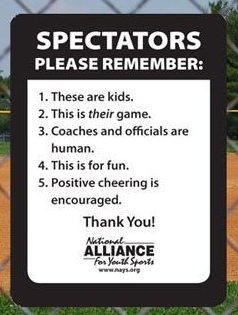
“Why wonot the world cup signuld anyone want to be an umpire?” I hear this question a lot in my roles as both a sport and performance consultant and as an umpire.  When someone asks that, what they are really saying is: why do you want to put yourself in the line of fire? What possible motivation do you have to be yelled at, questioned, berated, belittled, scrutinized, evaluated, rated, and basically run through the wringer on a game-to-game basis? There are as many reasons as there are people who choose to be on the other side of the whistle, behind home plate, or in the big chair court-side. For many it is a passion for the game, an aptitude for applying the rules, a desire to give back to their sport, a motivator for ongoing physical fitness, and the thrill of the challenge. Each official has their own reasons and many of us will gladly talk about why we love it. But the question stems from the same source as the sign reminding spectators that umpires and coaches are humans. Being a sports official at any level can be a challenge. I’ll touch on a few of those challenges and then propose a few ways SPP consultants may be able to help officials cope with them.
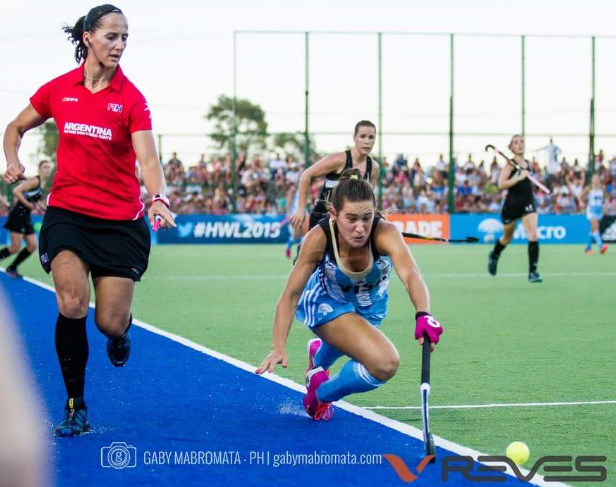
Umpires and referees are athletes in their own right. Think about it. While the physical demands are different in each sport, in sports like soccer, field hockey, lacrosse,  and ice hockey, officials are expected to physically keep up with the play, make hundreds of decisions a minute, know and

Michelle-Joubert-fieldhockey-refsofrio-june-2016

FIH umpire Michelle Joubert- Hockey World League 2015

appropriately apply the rules, be present mentally and emotionally, block out tons of stimulus from fans, coaches, the weather, and sometimes their own minds. At the same time as gating out information, they can’t close out too much lest they miss something important.

No one plays a perfect game, no one coaches a perfect game, and no one umpires a perfect game. Otherwise, why would we play the game at all? Pressures upon officials to be perfect can be immense. In the era of video, instant replay, super slow-mo, and social media, no flaw goes unexamined, no call goes unquestioned, and no official can make a mistake without hearing about it later. From pee-wee softball to world cup soccer, armchair officiating can create massive pressure both in the moment and on the longevity of officials.

So let’s examine two elements from a sport and performance psychology perspective.

Focus. If it’s too broad, you can lose track of what is important. Some people describe this as losing concentration but I tend to look at it as drinking from the firehose. It’s not that your concentration goes away in this case, it’s that your brain hits its cognitive load and you don’t know how to shift back to what is important. If your focus is too narrow, it’s easy to get caught up in the play, miss crucial information or move your body in anticipation of what it coming next. You’ve put blinders on your brain and frozen yourself.

From an SPP perspective, there are many tools to help with focus and attention. I like to describe three states of focus- squirrel brain, sloth brain, and zombie brain. The first two should be fairly straightforward. When your attention is all over the place, you become like a squirrel trying to cross the road. Sloth brain is just the opposite; you get super delayed in thinking and reacting because your focus has gotten too tight. Zombie brain is how I describe the ideal state. In SPP we talk about being where you need to be when you need to be there as a goal. When you’re experiencing zombie brain, you aren’t over- or under- processing, you’re taking in just the right amount of information. Keys here are to recognize when you are sliding away from zombie brain, regroup your thoughts and your body, and refocus appropriately. When you’re in zombie brain, you aren’t struggling to process anything, it all just flows in and out like breathing. Working with an SPP consultant can help you train to recognize (early), regroup (quickly), and refocus (effectively) your attention.

What do you do when you make a mistake? It would be ridiculous to train mentally and emotionally as if you never make a mistake. You only have one pair of eyes and milliseconds to process information and make the

KeaneReferee_468x402

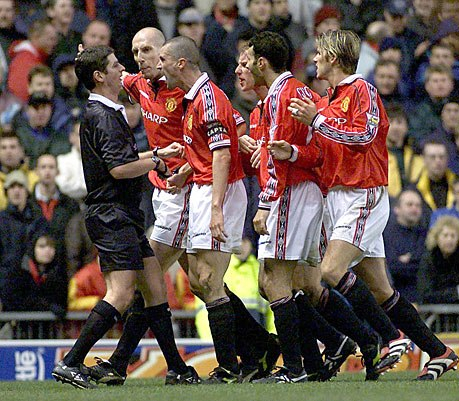
Manchester United players politely expressing disagreement with Andy D’Urso

correct call. You may have the benefit of a partner, officiating team, or video review, but more often than not, the call is yours and you have to make it. Each sport has its own mechanisms for correcting a call but what SPP concerns itself with is what happens internally when you make a mistake. Small errors are good training ground here. As the game moves on from your goof, how do you allow yourself to move on? Do you find yourself dwelling or are you able to let go and move on? This may be a good moment to take a quick look at my previous post about mindful meditation. Recovering from mistakes is a skill that you can cultivate in your mindful practice. When you are away from the game, you can begin reinforcing the idea that you can’t go back and change the past and stressing about it now only impacts your performance negatively. With mindfulness, you can work on remaining in the present moment, accepting what has passed and letting go of the stress it may have produced.

Next On the Horizion, we’ll be looking at getting and giving feedback, and executing under pressure.


Does Meditation Work?

If you follow podcasts or any sort of social media, no doubt you’ve come across the concepts mindful meditation and mindfulness. They’re hard to miss. Maybe you’ve dismissed them as new age woo woo but there is much more to cultivating mindfulness than incense and relaxing music.

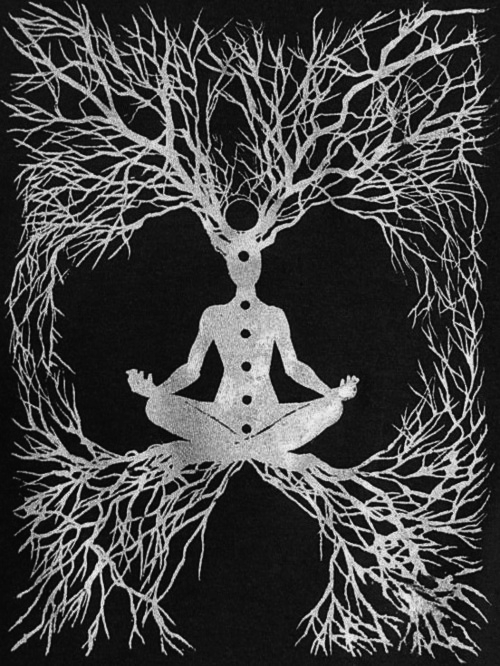
I’m not going to bury the leads herequiet meditation

  • Mindfulness works to improve performance for many people (but not everyone)
  • A mindful state takes time and effort to cultivate
  • With that time and effort, you can learn to achieve a mindful state without sitting still and deep-breathing for 20 minutes
  • Mindfulness can be beneficial in multiple realms of your life

In the words of the mindful movement’s founder, Jon Kabat-Zinn[1], “Mindfulness is awareness that arises through paying attention, on purpose, in the present moment, non-judgmentally.” Sounds straightforward, right? I’m sitting here at my laptop as I type these words, there’s music on in the café, there are people and conversations going on, my phone is sitting next to me, the fan is spinning above my head, and my tea has gone cold. That’s awareness, right? A mindful practice would have me go farther than that in paying attention.

If you read my introductory post, you may have picked up on how mental skills need to be trained just like physical skills. If you’ve tried meditation, yoga, breath work, or some form of mindful exercise meditating-while-being-eaten-by-mosquitosbefore and you didn’t think it was for you, I have a question. Did you try it once and think it was lame or too hard? Did you have an image of sitting in a full lotus position with birds perched on your shoulder and did you get frustrated when all you could think about was how much your nose itched and how the sweat was working its way toward your butt? You are NOT alone! Were you confused, bored, or distracted? That is TOTALLY NORMAL.

We train our minds just like we train our bodies. A young dancer gets frustrated because they can’t do a particular movement. Do we tell them to quit dancing? Probably not. We find ways to help them correct technique, encourage changing approach, find a method which works, and then we tell them to practice. Mindfulness requires the same tenacity while also encouraging gentleness with oneself and the world.

I can hear you now, “Whit, why would I meditate? It’s just not for me. I can’t meditate when I’m hurtling down a mountain at a hundred KPH. I don’t mediate while I’m singing, and I certainly don’t mediate when I’m responding to a four-alarm fire!” I hear you and I totally agree that mid-air is not the time for a full lotus.

I like to think of Meditation as training and Mindfulness as the execution in our mental skills practice[2]. We use meditation to build space inside ourselves and to cultivate a mindful state of being. By training and growing that space of calm and centered energy, we can learn how to draw upon that energy at will.  Take that skier flying down the mountain for example. She may not be consciously meditating but when she starts to lose an edge, the calm space that she has created by training her mind may allow her to recover he center line rather than losing her balance. The singer who is about to hit the challenging passage in his recital may find that instead of straining for the breath, he is able to find the air without tension because he has trained his mind to let go of anticipating tension. And that firefighter might be able to respond with a flexible mind instead of rigid tension when things don’t go as anticipated because she can draw upon a mental image she built just for that purpose. All of these results can take less than a second to access and may make just enough of a difference to alter performance.

So, as I move along with this blog, I am going to encourage you to seek out a mindful meditation practice. It can be anything from a formal yoga practice to an informal walking and conscious breathing while you’re walking the dog or taking a shower. I will be writing more about mindfulness but reading words on a screen is no substitute for purposeful doing. There are resources out there for you to find the methods which work for you.

Let me know what you discover!


[1] https://www.librarything.com/author/kabatzinnjon

[2] This is, of course, incredibly over-simplified but bear with me for a while

Greetings Reader,

Welcome to what’s On the Horizon. If you have found your way here, chances are you are a friend or family member (thanks, gang!) or you are somehow interested in sport, performance, mental skills, umpiring, refereeing, or the science of the mind. From time to time, I will send you to work of wiser people than I either because I find it interesting or because I have no desire to reinvent the wheel. For the most part, I’ll be writing about sport and performance psychology (SPP) with the caveat that I am NOT a psychologist, this is NOT therapy and nothing I write here should be construed as mental health advice or clinical assessment. I am a student member of the American Psychological Association (APA) and the Association for Applied Sport Psychology (AASP).  This blog represents my current learning, projects, passions, and musings.

In the interest of not reinventing the wheel, I urge you to take a quick look at AASP’s website for a technical explanation of what SPP is and what it’s practitioners do.

I’ll wait…

…   …   …   …

Welcome back! So what does all that mean? Speaking for myself, I am deeply passionate about helping give you the tools to take what you do and do it better. SPP practitioners are well-grounded in science and theory. Where we excel is in applying theory to real world situations. When our clients want to go from good to better and from better to excellent, that is where we can make a real difference.

It doesn’t matter if you are an elite level athlete trying to shave a few seconds off a time, a student trying to increase an SAT score, an actor with a challenging audition, a neurosurgeon trying to perfect a technique, or a CEO working to bring their team together, we have tools to help.

SPP is not magic or voodoo. I can’t wave a wand and make you all better. Just like any other type of skill, acquiring and improving new mental skills is training. Most people aren’t going to have success running a marathon if they’ve never run a mile and the same holds true for mental skills. SPP practitioners are not replacements for your coaches. In fact, the best teams are usually made when technical, tactical, and physical coaches work in tandem with mental skills coaches.

As a sport and performance consultant, I can help you set goals, create and nurture new mental routines, find and maintain focus, relax, energize, execute, and evaluate your performance. Whether you are an individual performer, coach, member of a team, or manager, I look forward to seeing what we can build together.

Whit Ryan

July 2017, Denver, CO

What is Sport and Performance Psychology?